Talks on innovations in Robotics, Vision, and Control
151-0623-00L ETH Zurich Distinguished Seminar in Robotics, Systems and Controls
Welcome to the ETH Zurich Distinguished Seminar series in Robotics, Systems and Controls hosted by robotics professors at ETH Zurich. These open talks focus on innovations in robotics, computer vision, control systems, and machine learning and are held in person at ETH Zurich’s main campus.
About the Series
Schedule
- Selected Fridays at 16:15 in ETH HG G 3
- Dates, rooms, and format changes are shown on each talk card
Next Talk
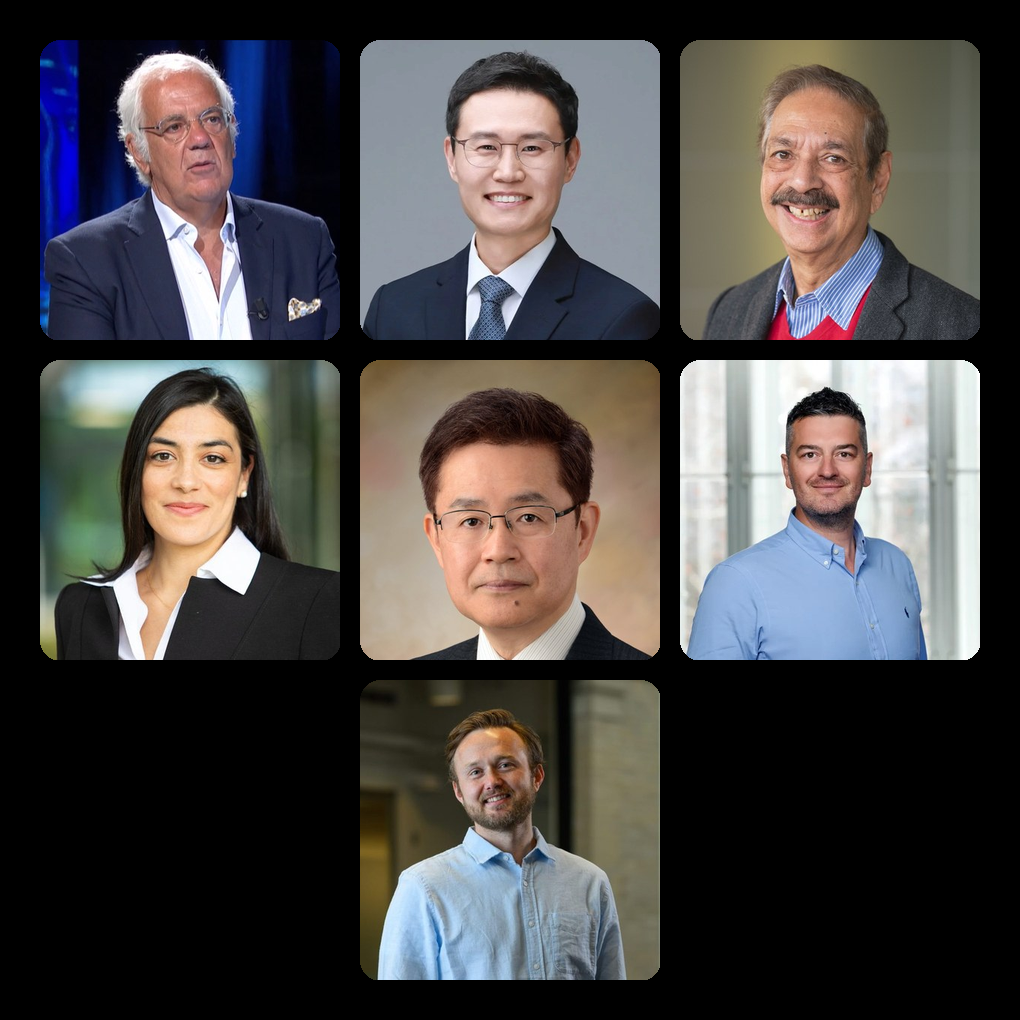
Enzyme Motors and Pumps: From Transport to Collective Behavior
Fall 2026 Talks
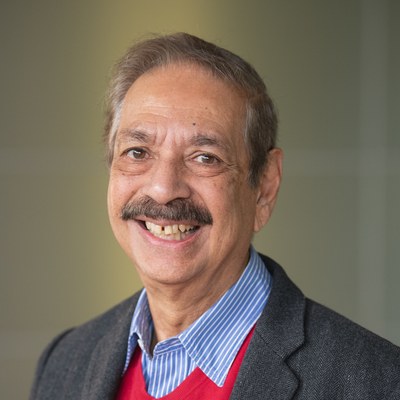
A Revolutionary Theranostics Approach for Robotized Colonoscopy
Speaker: Bruno Siciliano
Affiliation: University of Naples Federico II
Host: Roland Siegwart
Date: September 25, 2026
Time & Location: 16:15 CEST; ETH HG G 3
Abstract and Bio
Abstract
This talk will present the underlying concepts of EndoTheranostics, a novel ERC Synergy Grant project aiming at revolutionizing the diagnosis and therapy (theranostics) of colorectal cancer (CRC), impacting the quality of life of millions of individuals. CRC represents a significant proportion of malignant diseases. Interventions are often carried out during the latter stages of development, leading to low patient survival rates and poor quality of life. In 2022 a European Commission report stated that “colonoscopy-based screening has higher sensitivity than testing for blood in stool, but it is less acceptable to participants”. At the same time, effective methods to treat polyps in the colon are limited. Current approaches are often associated with unsafe oncological margins and high complication rates, requiring life-changing surgery. EndoTheranostics will usher in a new era for screening colonoscopy, advancing the frontiers of medical imaging and robotics. A tip-growing or eversion robot with a sleeve-like structure will be created to extend deep into hollow spaces while perceiving the environment through multimodal imaging and sensing. It will also act as a conduit to transfer miniaturized instruments to the remote site within the colon for theranostics. With these capabilities, the system will be able to offer: (i) painless colon cleansing in preparation for endoscopy, (ii) real-time polyp detection and tissue characterization through AI-assisted multimodal imaging, and (iii) effective removal of polyps by conveying a “miniature mobile operating chamber” equipped with microsurgical tools to the target through the lumen of the eversion robot. The results of the first two years of the project will be presented. A control architecture that enables the activation and deactivation of different levels of autonomy while maintaining stability is realized. Autonomous control strategies for performing surgical tasks are tested in simulation and on the da Vinci Research Kit. Preliminary results on the modelling of concentric tubes based on learning techniques are demonstrated.
Bio
Bruno Siciliano is professor of robotics and control at the University of Naples Federico II. He is also Honorary Professor at the University of Óbuda where he holds the Kálmán Chair. His research interests include manipulation and control, human–robot cooperation, and service robotics. Fellow of the scientific societies IEEE, ASME, IFAC, AAIA, AIIA, NAAI, and academician of WAAC, he received numerous international prizes and awards, including the 2024 IEEE Robotics and Automation Pioneer Award. He was President of the IEEE Robotics and Automation Society from 2008 to 2009. He has delivered more than 150 keynotes and has published 27 books and more than 400 papers. His book “Robotics” is among the most adopted academic texts worldwide, while his edited volume “Springer Handbook of Robotics” received the 2008 PROSE Award for Excellence in Physical Sciences & Mathematics. His team has received more than 25 million Euro in funding in the last 15 years from competitive European research projects, including two ERC grants.
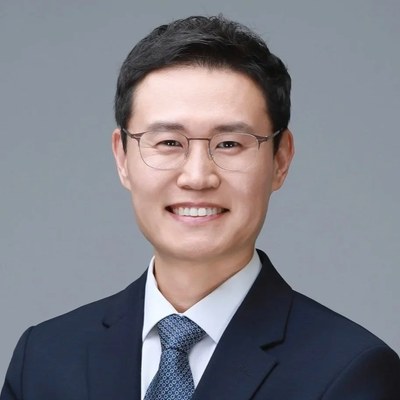
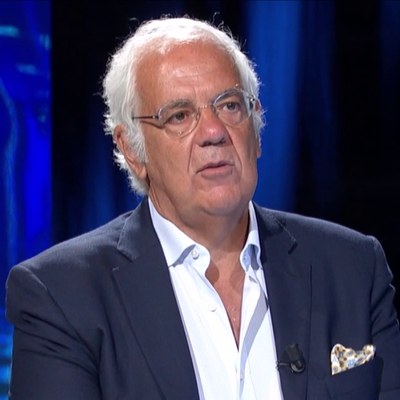
Beyond Softness: Engineering Liquid Metal-based Reconfigurable Robotic Materials for Bio-integrated Electronics and Systems
Speaker: Jae-Woong Jeong
Affiliation: KAIST
Host: Hedan Bai
Date: October 09, 2026
Time & Location: 16:15 CEST; ETH HG G 3
Abstract and Bio
Abstract
Bioelectronic technologies have advanced rapidly, offering new opportunities for healthcare, diagnostics, therapeutic interventions, and human–machine interfaces. However, a fundamental challenge remains: conventional electronic systems are mechanically mismatched with soft, dynamic biological tissues, limiting their long-term integration and functionality. While soft, tissue-like electronics improve comfort and biocompatibility, their high compliance often compromises structural robustness, load-bearing capability, and functional integration required for real-world applications. In this talk, I will present a materials-driven approach that moves beyond passive softness toward reconfigurable robotic materials enabled by liquid metal (LM) composites. These materials exhibit temperature-responsive transformations, enabling dynamic modulation of mechanical stiffness, geometry, and functional properties. By integrating conductivity, sensing, and actuation within a single material platform, LM-based composites enable electronic systems that are not only deformable, but also physically adaptive and multifunctional. I will introduce the design principles, material architectures, and fabrication strategies underlying these liquid metal-based systems, and demonstrate how they enable a new class of bio-integrated electronics. Applications will be presented across wearable and implantable devices, as well as robotic skins with adaptive tactile sensing, alongside magnetically-actuated shape-morphable displays and soft robotic systems. These examples illustrate how reconfigurable materials can unify electronics, sensing, and actuation within a single material platform. By embedding functionality directly into materials, this work redefines the role of electronics, from rigid, planar devices to physically adaptive systems, and opens new opportunities for seamless integration between humans and engineered systems.
Bio
Dr. Jae-Woong Jeong is a KAIST Endowed Chair and Professor of Electrical Engineering at the Korea Advanced Institute of Science and Technology (KAIST). He received his Ph.D. in Electrical Engineering from Stanford University in 2012 and subsequently conducted postdoctoral research at the University of Illinois at Urbana–Champaign from 2012 to 2014. Prior to joining KAIST, he served as an Assistant Professor in Electrical, Computer, and Energy Engineering at the University of Colorado Boulder from 2015 to 2017. His research focuses on developing innovative electronic materials, device architectures, and fabrication strategies to advance bio-integrated electronics and systems. Dr. Jeong has received numerous honors, including the Korea Scientist and Engineer Award from the Ministry of Science and ICT (2025), the KAIST Transdisciplinary Research Award (2024), the S-Oil Young Scientist Award (2023), and recognition for one of the Top 100 National R&D Achievements in Korea (2023).
Enzyme Motors and Pumps: From Transport to Collective Behavior
Speaker: Ayusman Sen
Affiliation: Pennsylvania State University
Host: Salvador Pané Vidal
Date: October 23, 2026
Time & Location: 16:15 CEST; ETH HG G 3
Abstract and Bio
Abstract
One of the more interesting recent discoveries has been the ability of enzymes to catalytically harness the chemical energy in their environment for mechanical work. Work from our group has shown that enzymes participating in catalytic cascades show surprising emergent behavior, ranging from directional chemotactic motility to dynamic assembly in response to chemical gradients. Furthermore, we find that enzyme chemotaxis can generate non-reciprocal interactions between complementary enzymes. The resultant organization and collective behavior of interacting active enzymes show remarkable similarities to the biological world. When enzymes are anchored to surfaces, the catalytic reactions can propel the surrounding fluid. We will show that precise sculpting of fluid flow, including flow enhancement and flow reversal, becomes possible in coupled pump systems depending on the geometric placement of the pumps.
Bio
Ayusman Sen is the Verne M. Willaman Professor of Chemistry, and Professor of Chemical Engineering and Materials Science & Engineering at the Pennsylvania State University. He is Fellow of both the American Association for the Advancement of Science and the Royal Society of Chemistry, and recipient of the Alexander von Humboldt prize and the Medal from the Chemical Research Society of India. His research interests encompass active autonomous systems, synthetic nano and micromotors, micropumps, and systems chemistry. He is the author of over 440 scientific publications and holds 25 patents. Sen’s pastime centers on enological and gastronomical explorations.
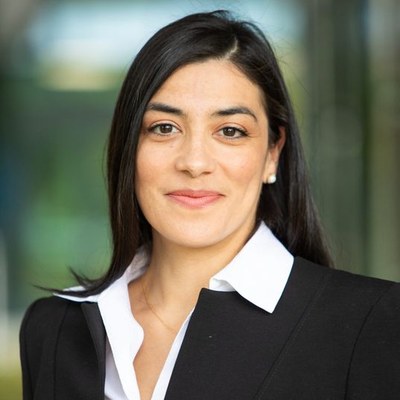
Trust, Sensing, and Learning for Real-World Multi-Robot Autonomy
Speaker: Stephanie Gil
Affiliation: Harvard University
Host: Robert Katzschmann
Date: November 06, 2026
Time & Location: 16:15 CET; ETH HG G 3
Abstract and Bio
Abstract
Multi-robot systems are physically embodied networks — they sense, move, and communicate through the physical world. This talk argues that their physicality is a resource, one that lets us break past classical limits on coordination and security. We first show how communication can serve as a sensor where robot motion turns off-the-shelf wireless signals into angle-of-arrival measurements between agents. Because such signals are difficult to forge, those measurements also yield evidence about who is telling the truth. This is the foundation of cy-trust, in which stochastic observations of trust model an agent's trustworthiness probabilistically from physical rather than cryptographic evidence. Under this framework, consensus, distributed optimization, and event detection admit almost-sure convergence with bounded deviation even when malicious agents exceed half of a node's connectivity, past the classical Byzantine bound. We present both theory and hardware experiments. We then turn to sequential decision-making, where rollout-based reinforcement learning reweights possible futures using real-time sensing, the same weighting idea applied to time rather than to neighbors. Case studies include autonomous rideshare routing and the first autonomous robotic rendezvous with sperm whales in the wild, off Dominica. We close where these threads meet: long-horizon planning that stays provably resilient when the data informing the plan may itself be corrupted.
Bio
Stephanie is the John L. Loeb Associate Professor of Engineering and Applied Science (SEAS) and an Associate Faculty member of the Kempner Institute at Harvard University. Her research focuses on trust and coordination in multi-robot systems, with applications in security, communication, and autonomy. Her contributions to the field have been recognized through the DARPA Young Faculty Award (2024), the Office of Naval Research Young Investigator Award (2021), and the National Science Foundation CAREER Award (2019). She was also named a 2020 Sloan Research Fellow for her work at the intersection of robotics and communication. She earned her Ph.D. from CSAIL at MIT, specializing in multi-robot coordination and control, and completed her B.S. at Cornell University.
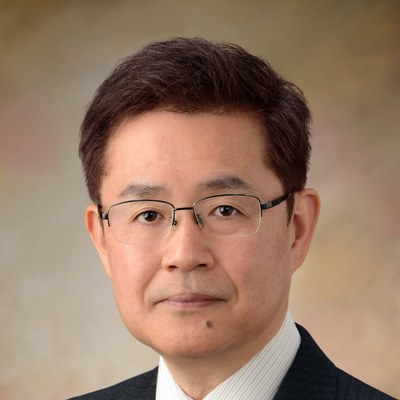
Soft Embodiment for Real-World Adaptive Intelligence
Speaker: Koh Hosoda
Affiliation: Kyoto University
Host: Robert Katzschmann
Date: November 20, 2026
Time & Location: 16:15 CET; ETH HG G 3
Abstract and Bio
Abstract
Robots operating in the real world must cope with environments that are uncertain, changing, and only partially observable. Conventional approaches often address this challenge by increasing the precision of models, sensors, and computation. However, biological systems achieve robust and adaptive behavior not only through neural processing, but also through the physical properties of their bodies. This talk explores how soft embodiment can contribute to real-world adaptive intelligence. First, I will introduce the concept of soft embodiment and discuss how compliant bodies, distributed sensing, and morphology can reduce the burden on explicit perception, modeling, and control. I will then present our work on muscular skeletal quadruped robots driven by pneumatic artificial muscles. In particular, I will show how proprioceptive sensation based on muscle tension can support adaptive locomotion on uneven terrain, even with simple control structures and limited external sensing. The talk will also cover soft tactile sensors and ion-gel-based wearable sensing systems, focusing on how information from the body and the environment can complement each other. These examples motivate the idea of cross-modal transfer, in which the redundancy and constraints inherent in a soft body can be exploited to infer or compensate for missing sensory information. Finally, I will discuss our recent research vision, RAISE: Real-world Adaptive Intelligence from Soft Embodiment. The goal is to combine soft robotics, continual learning, adaptive simulation, and generative AI to develop robots that can continue to function in dynamic environments, tolerate bodily change and damage, and adapt through ongoing interaction with the real world.
Bio
Koh Hosoda is a Professor of Robotics in the Graduate School of Engineering at Kyoto University, Japan. He leads the Adaptive Robotics Laboratory, which explores the constructive understanding of adaptive intelligence, with particular emphasis on soft embodiment, bio-inspired robots, muscular skeletal systems, and soft sensory systems. He was a guest professor at the University of Zurich in 1998. He subsequently spent two decades at Osaka University, where he worked extensively on soft robotics and embodied intelligence. His recent research focuses on proprioceptive locomotion, soft tactile sensing, and real-world adaptive intelligence through the integration of soft robotics, continual learning, and AI.
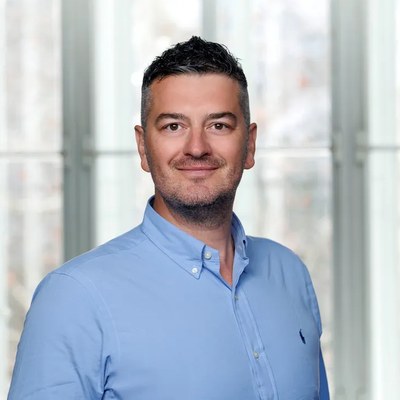
From a Mechanistic Understanding of the Human–Machine Interface to Personalized Robotic Treatments
Speaker: Stanisa Raspopovic
Affiliation: Medical University of Vienna
Host: Carlo Menon
Date: December 04, 2026
Time & Location: 16:15 CET; ETH HG G 3
Abstract and Bio
Abstract
People living with amputations, stroke, or spinal cord injury can have diminished capacity to perform the activities of daily living. They also have reduced mobility, which can promote disease development and can hinder full participation in society. Advances in nervous system interfacing present a promising venue for the assistance and rehabilitation of individuals living with various neurological disabilities. Despite a wide range of possibilities for human-machine interfacing, the nature of the optimal human-machine interaction remains poorly understood. Knowledge gained from the in-silico modelling of targeted neural structures can inform an optimized design of such interfacing. Our group is therefore developing exact models of various nerves, enabling AI-based personalized treatments. We have pioneered several human-machine systems that translate artificial sensors’ read-outs into “language” understandable by the nervous system. Our group developed a wearable neurorobotic system that combines electrical neurostimulation with portable hand exoskeletons. In a clinical study with patients with neurological hand impairments, the technology supported finger dexterity, tactile perception, and grasping control. This demonstrates the potential of personalized assistive robotic systems for people living with spinal cord injury or brain injury. We also developed a smart orthosis for people with diabetes that “speaks” to their residual healthy nerves while diminishing pain. The effects of the smart orthosis at the brain level were evaluated, showing important benefits. These studies are a keystone for developing personalized neurotechnology, empowering people to reclaim their autonomy and quality of life.
Bio
Stanisa Raspopovic has been a full professor of Biomedical Engineering at the Center for Medical Physics and Biomedical Engineering and at the Comprehensive Center for Artificial Intelligence in Medicine, Medical University of Vienna, since 2024. He was previously an assistant professor of Neuroengineering at ETH Zurich (2018–2024) and a senior scientist at EPFL. He studied electrical engineering at the University of Pisa and completed his doctorate in biomedical robotics at the Scuola Superiore Sant’Anna in Pisa. His research focuses on innovative methods for treating people living with neurological disabilities. In particular, he develops mechatronic systems that directly interface robotics with the residual nervous system. He has achieved groundbreaking translational research results in bidirectional control for patients with amputations, diabetes, stroke, and spinal cord injury. His honors include the Science & PINS Prize in Neuromodulation 2021 and the ETH Zurich Latsis Prize 2021. He has won multiple prestigious European grants, including an ERC Starting Grant in 2018 and both ERC Consolidator and Proof-of-Concept Grants in 2023.
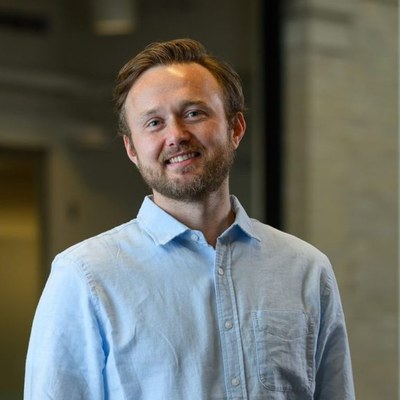
Multimaterial Photopolymers for Soft Robotics
Speaker: Thomas J. Wallin
Affiliation: MIT
Host: Hedan Bai
Date: December 18, 2026
Time & Location: 16:15 CET; ETH HG G 3
Abstract and Bio
Abstract
Multimaterial photochemistries provide a uniquely powerful platform for building soft robotics and wearable technologies, offering high spatiotemporal resolution to pattern regions of discrete material performance. This talk will highlight recent advances from my group in designing one-pot multimaterial photochemistries and manufacturing methods that increase the range of material properties available from the same chemistry. Such improvements increase the functional component density of soft machines and could enable one-step printing of fully functional devices. In particular, I will discuss how mechanical multimaterials and photo-ion generators can be employed to build synthetic analogs to musculoskeletal and peripheral nervous systems. Lastly, I’ll discuss where these efforts fall short, both from polymer chemistry and manufacturing perspectives, and how we can still employ this strategy to enable soft–stiff integration in conventional manufacturing workflows.
Bio
T.J. Wallin is an Assistant Professor in the Department of Materials Science and Engineering at MIT whose group specializes in photochemistry and volumetric printing. T.J. received his Ph.D. in Materials Science and Engineering at Cornell University under Rob Shepherd. From 2017 to 2024 he worked at Meta Reality Labs in its interactions team, co-developing materials and manufacturing technologies that helped build the haptic glove and EMG wristband. He has over 20 patents related to building soft robotic and wearable technologies.
Archives
- Spring 2026 - 12 talks on robotics, vision, sensing, and embodied intelligence
- Fall 2025 - 9 talks plus Swiss Robotics Day
- Spring 2025 - 15 talks on soft robotics, foundation models, and embodied AI